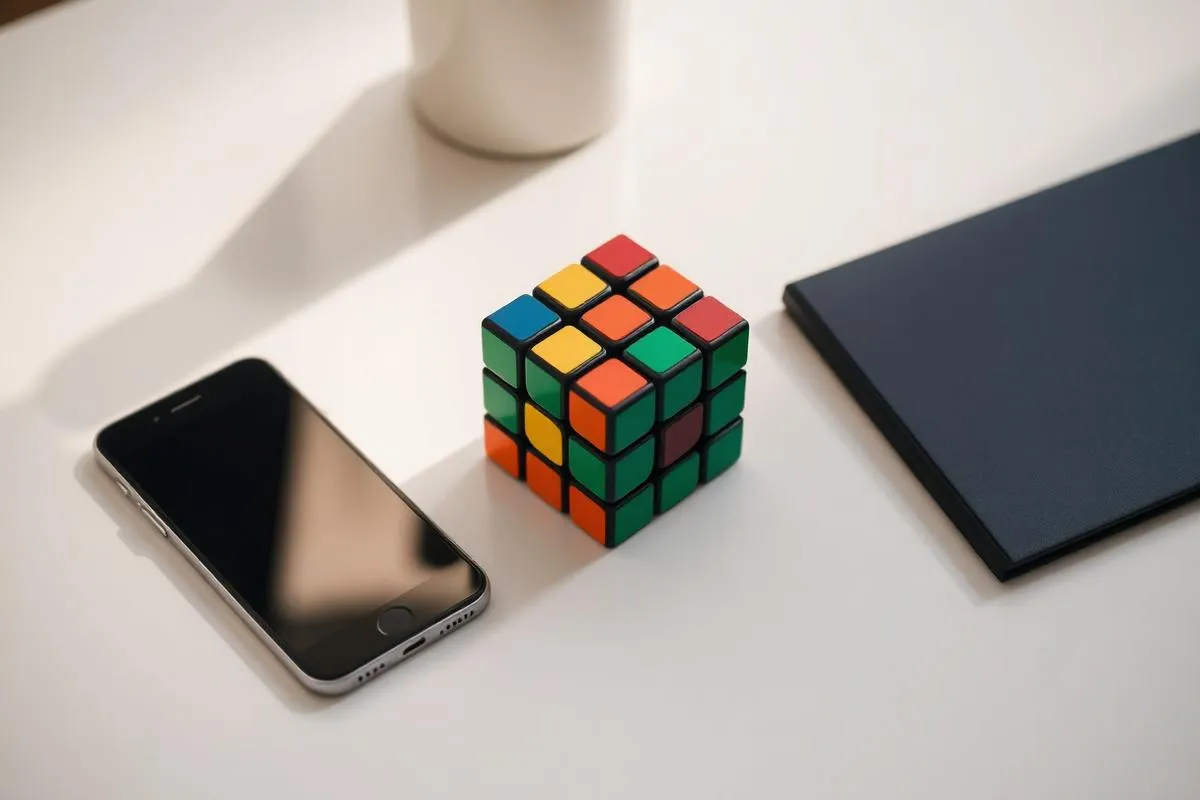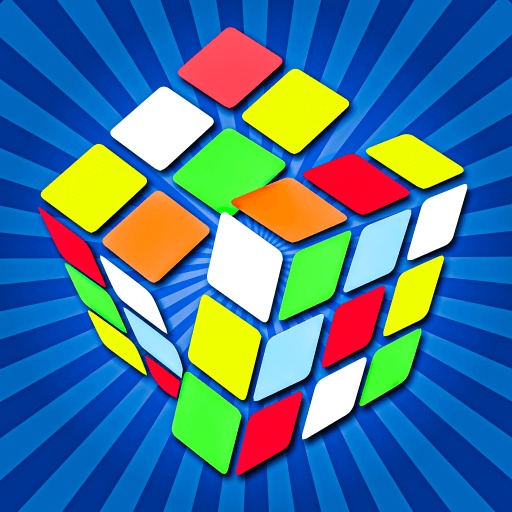

Solving a Rubik's Cube for the first time feels impossible — until you realise it is not one big puzzle but a sequence of small, repeatable stages. This guide walks through the beginner's layer-by-layer approach, the same structure a solver app follows when it hands you a move list.
Understand the cube first
A standard 3×3 cube has centre pieces that never move relative to each other, edge pieces with two colours, and corner pieces with three. The centres define what colour each face must end up as, so they are your reference points throughout the solve.
The three piece types
- Centres — one per face, fixed, define the face colour.
- Edges — twelve pieces, two colours each.
- Corners — eight pieces, three colours each.
The beginner method, stage by stage
The layer-by-layer method breaks the solve into stages you can learn one at a time. Do not try to memorise everything at once — get comfortable with each stage before moving to the next.
- Build the white cross on one face.
- Place the white corners to finish the first layer.
- Solve the middle layer edges.
- Make a yellow cross on the last face.
- Orient and permute the final layer pieces.
Practising efficiently
Repetition is what turns algorithms into muscle memory. Solve the same stage several times in a row rather than rushing through a full solve. If you get stuck mid-solve, a solver app can show you a valid path forward from your current cube state so you can keep learning instead of resetting.