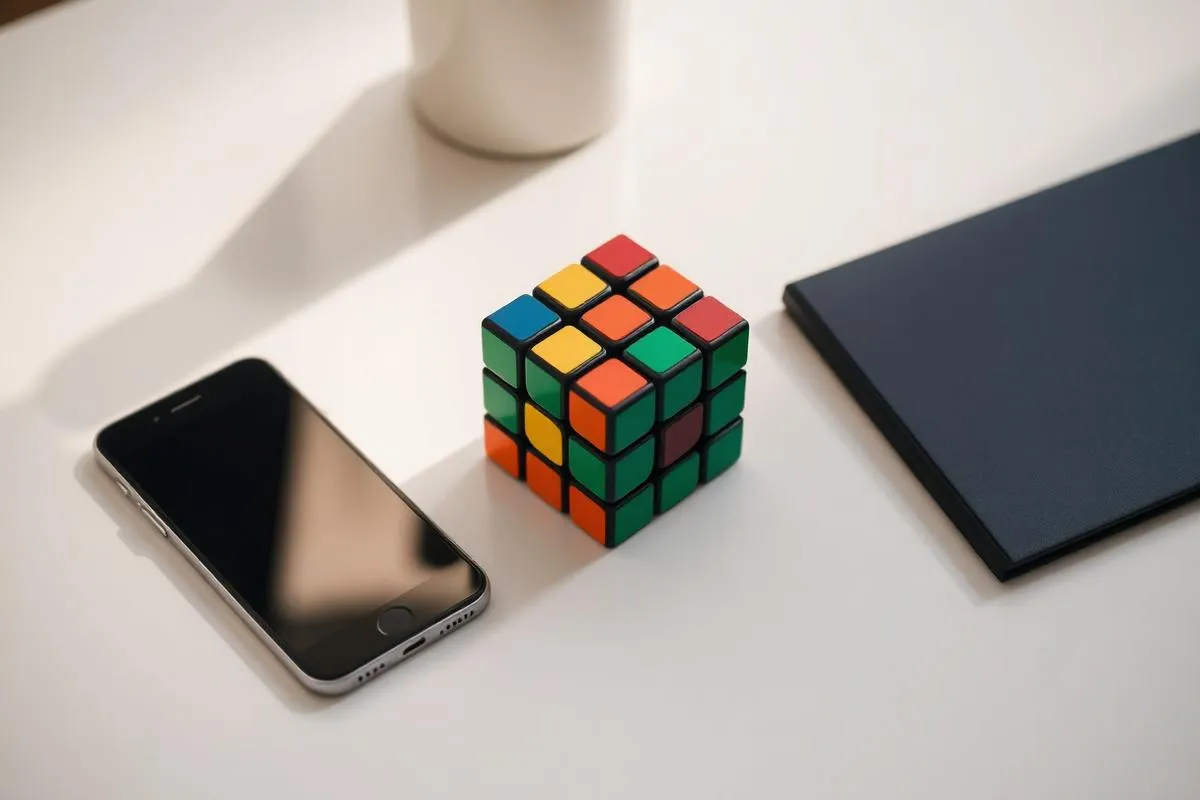

Children pick up the cube surprisingly quickly when the goal is broken into small wins instead of one intimidating puzzle.
Start with one stage only
The white cross is a complete, satisfying milestone on its own. Let it be the goal for the first few sessions and celebrate it before introducing anything else.
Make the algorithms memorable
- Give sequences names, like 'the elevator' for R U R' U'.
- Say the moves out loud together while turning.
- Keep practice sessions short — ten focused minutes beats an hour of frustration.
Use a solver as a safety net
Getting stuck halfway is the most common reason kids give up. Scanning the cube and following a suggested path forward keeps momentum without restarting from scratch.
Why it is worth it
Beyond the party trick, the cube builds patience, spatial reasoning and the habit of solving a big problem by breaking it into stages.