What manual solving means
Manual solving is the traditional route. You learn a method — usually a layer-by-layer beginner method — memorise the move sequences it uses, and then recognise cube states well enough to know which sequence to apply next.
It takes practice. The reward is that you can pick up any scrambled cube and solve it without help, and you understand why each stage works.
- You learn and memorise a solving method
- You recognise cube states yourself
- No phone or app is needed once the method is learned
What the Rubik's Cube Solver app does
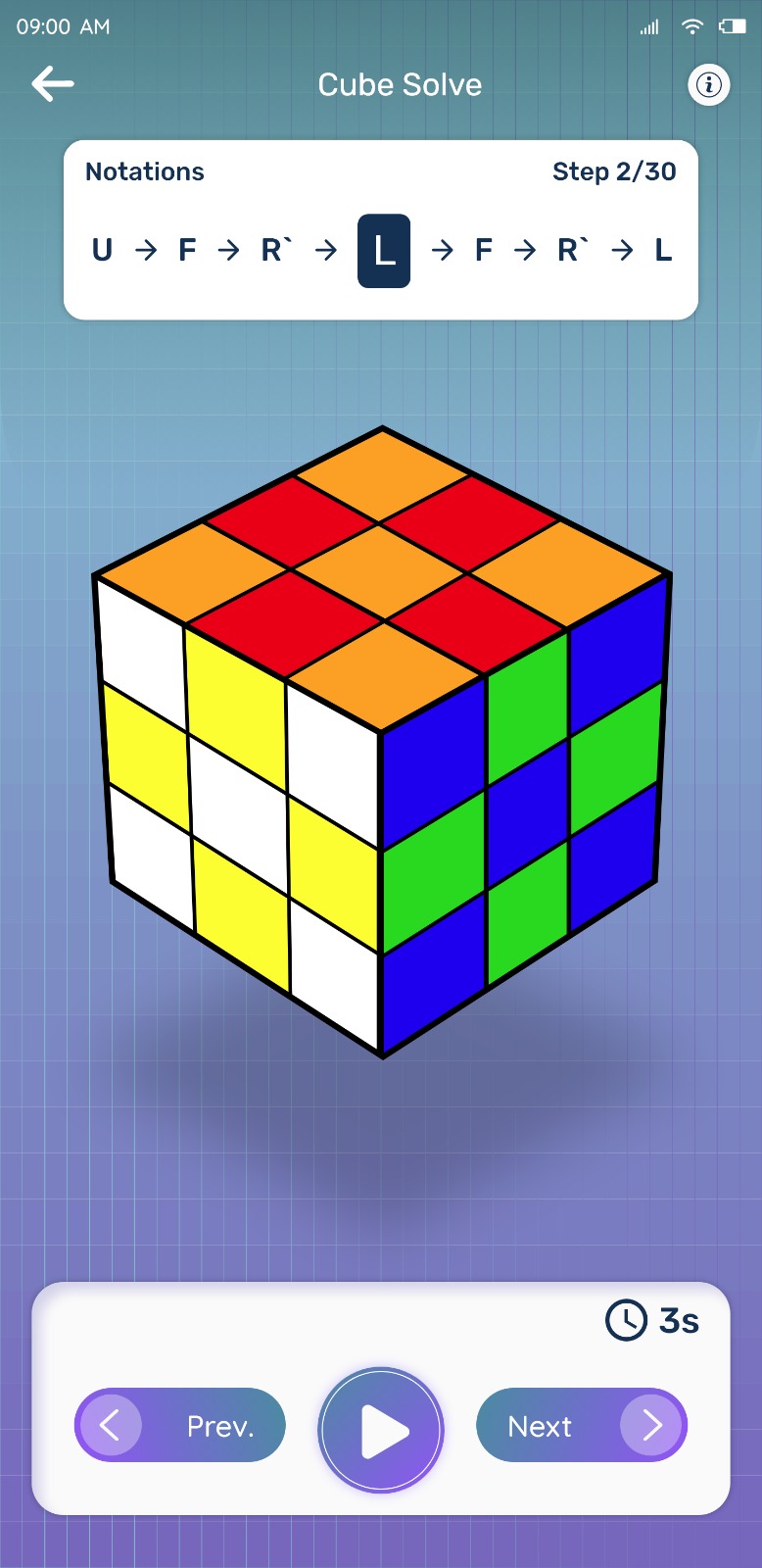
Rubik's Cube Solver asks for your cube's current configuration. You can scan each face with the Camera Scanner, or fill the colours in yourself with Manual Input. The app then produces a sequence of standard cube moves that leads to a solved cube, and presents those moves one at a time so you can apply them and check your progress.
- Camera Scanner reads each face through your phone camera
- Manual Input lets you tap the colours in when scanning is not convenient
- The Step-by-Step Solver shows the move list in order
- The Virtual Cube lets you practise turns on screen
Side-by-side comparison
| Manual solving | Rubik's Cube Solver app | |
|---|---|---|
| Starting effort | Learn and memorise a method first | Enter the cube and start following moves |
| Skill built | Full independent solving skill | Familiarity with moves through repetition |
| Getting unstuck | Depends on your own recognition | A complete move list for your exact scramble |
| Equipment | Just the cube | Cube plus an Android phone |
| Best for | Cubers who want to solve unaided | Beginners, stuck solves, and practice with guidance |
Advantages of learning manually
- You can solve any scramble without a device in hand
- You understand the purpose of each stage of the solve
- It is a genuine skill that transfers to faster solving methods
- There is real satisfaction in a solve you worked out yourself
Advantages of guided solving
- You get a working solution for the cube in front of you today
- Moves are shown one at a time, so no notation knowledge is required to begin
- You can repeat solves to build muscle memory
- The Virtual Cube lets you rehearse turns before applying them to a real cube
When a beginner may prefer each approach
If your goal is to learn to solve a Rubik's Cube unaided, start with a beginner method and use the solver only when you get truly stuck. If your goal is to get a scrambled cube back to solved — a cube a child scrambled, or one that has sat unsolved for years — the app is the faster route.
Many people use both. They follow the app's step-by-step solution first, then repeat the same kind of solve manually until the pattern sticks.
How the app helps when you are stuck
Being stuck usually means the cube has reached a state your method does not cover, or a move sequence went wrong midway. Entering the cube exactly as it is now gives you a fresh, valid path to a solved cube from that point, rather than restarting the whole solve.
Try Rubik's Cube Solver
Scan your cube and get step-by-step solving instructions in seconds. Available for Android on Google Play.